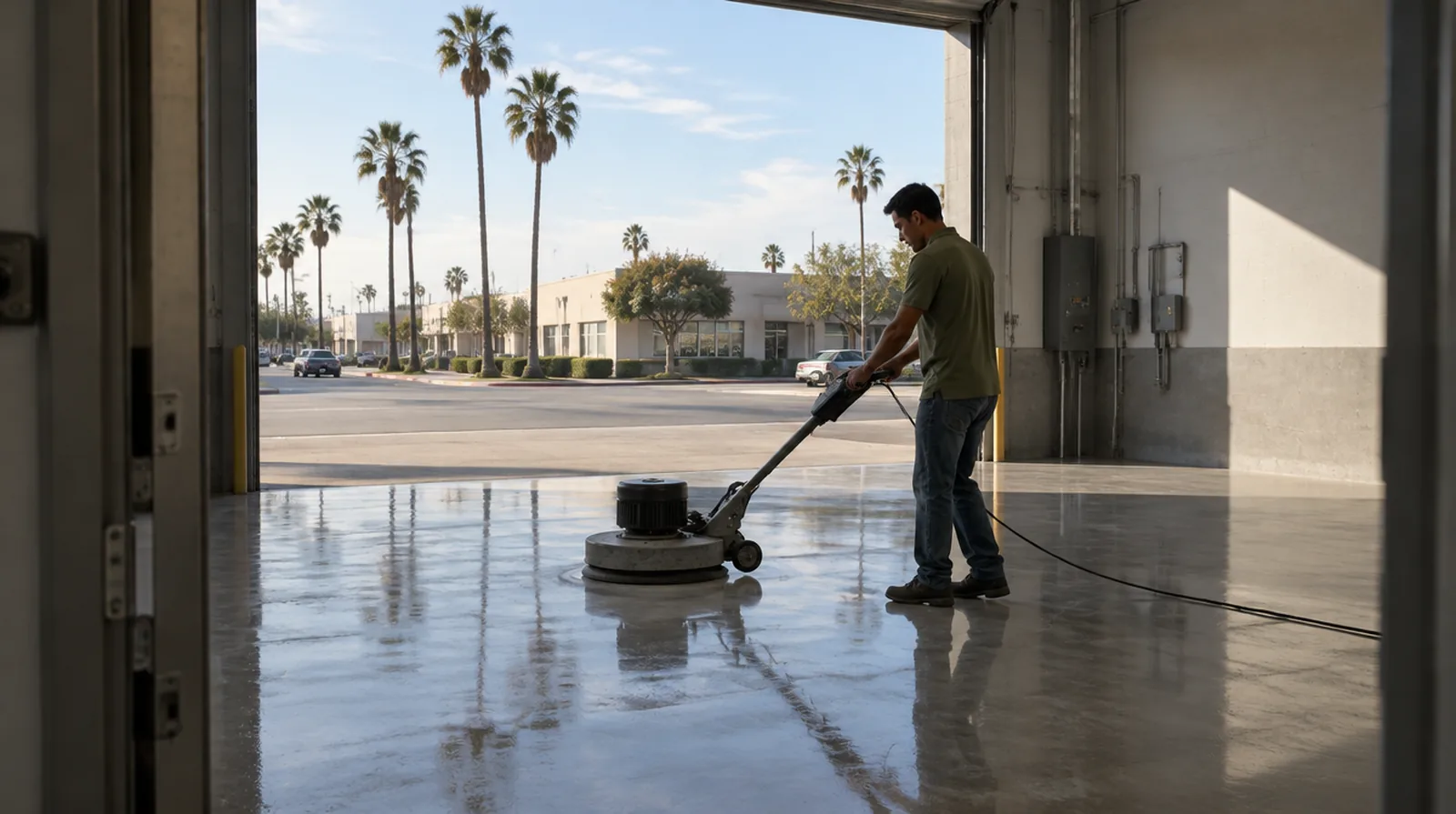
The steps
We start with coarse diamonds to open the slab and remove imperfections, apply a hardening densifier, then work up through finer grits until the floor reaches matte, satin or high gloss. A stain guard finishes it. If you want the longer version, this walkthrough of grinding and densifying a slab explains what each pass of the grinder actually does.
Why businesses choose it
It stops dusting, reflects light, needs little maintenance and holds up under foot and cart traffic. That makes it popular for showrooms and warehouses in Anaheim Canyon.
At home
Polished concrete suits modern homes and garage conversions. It shows the slab's history, so if you want a uniform look, a coating may suit you better.
How long does it take?
A small space can be done in a day or two.
How do I clean it?
Dust mop and use a neutral cleaner.
Warehouse dust
Bare warehouse slabs shed fine dust onto stock. Densifying and polishing solves that at the source.
Retail and restaurant floors
Strip-mall storefronts here often have old slabs under carpet tile or vinyl. When those come up, the adhesive gets ground off and the concrete becomes the finished floor. It holds up to rolling carts and daily mopping and costs less over time than replacing flooring every few years.
Is polished concrete right for your Anaheim space?
Polished concrete is the slab itself, ground and refined until it reflects light. There is no coating to wear through, which makes it a solid option for warehouses, open-plan offices, breweries and modern homes on newer, well-poured slabs. Older slabs with lots of patches can be polished, but the repairs stay visible.
Choosing a finish level
A satin finish hides scuffs and works well in busy commercial spaces. A high gloss looks striking in a showroom or a living space but shows dust more. We can make a small test area so you can see the difference on your own concrete.
Questions about polished concrete in Anaheim
Can you polish a slab that had carpet? Usually, once the tack strip holes and adhesive are dealt with. Expect some marks to show.
Will it crack? Polishing does not cause cracks, but it will not hide existing ones. We can fill them with a color-matched filler.
Polished concrete for food halls, shops and offices

Polished concrete suits Anaheim's food halls, cafes, shops and offices. It turns an existing slab into a durable, low-care floor.
The process
We grind with diamond tooling, apply a densifier and polish in steps to your sheen. A guard goes on last to help resist stains.
Busy dining spaces
Food halls and cafes see heavy foot traffic and spills. Polished concrete handles both, and the guard helps resist food and drink stains.
Slab character
Every slab is different. Some show more stone, others stay creamy. Patches and cracks remain visible.
Sheen
Satin hides scuffs better; high gloss reflects more light. We can polish a test area.
Care
Dust mop daily and use a neutral cleaner. Walk-off mats at entries keep grit off.
Homes
Some homeowners polish converted garages or open living areas. It pairs well with radiant heat.
Edges
We use hand tools at walls and columns so the sheen stays even.
Retail and showrooms
Shops in centers around town often have slabs under old carpet or tile. Once that is removed and the adhesive is ground off, polishing can give a durable finished floor for racks and foot traffic.
Repairs before polishing
Cracks, saw cuts and old anchor holes can be filled first. Filled spots may look a little different, which many owners accept.
Working around hours
We polish in sections and work evenings so a cafe or shop does not lose business days.
Ground-floor condos
Some newer condos and lofts near the Platinum Triangle have exposed slabs. Polishing them gives a clean, modern floor that pairs with simple finishes.
Breweries and tasting rooms
Taprooms and tasting rooms use polished concrete for a clean industrial look that handles spills, stools and steady foot traffic.
Ask about polishing
Call (657) 220-6760.